
Pole Barn Insulation in Waverly, TN
Pole barn insulation in Waverly, TN for full barns, livestock buildings and river-valley humidity. Spray foam that stops drips. Call (615) 492-9376 now.
Waverly is the seat of Humphreys County, set in the rolling country that drains toward the Tennessee River and the Kentucky Lake shoreline. The farm buildings out here do real work: cattle and horse barns, hay storage, equipment sheds, and the kind of multipurpose pole barns that hold a bit of everything a property needs. Two things define insulation work in this area. First, the river valley humidity is relentless, and bare metal roofs sweat hard through every season that swings. Second, these barns are almost never empty. They hold hay, stock, tractors and feed, and the insulation has to go in around the working life of the farm.
Volunteer FoamPros LLC is a family-owned, veteran-operated contractor based in Burns in Dickson County, and Waverly is within our regular service range. Call (615) 492-9376 or request an estimate and we will come see the building.
Insulating a Barn You Cannot Empty First
Most insulation advice quietly assumes a clean, empty building. Almost no working barn in Humphreys County looks like that, and we plan accordingly.
Closed cell foam is applied overhead from a lift, which means the floor stays yours. Hay that cannot be moved gets tarped in place. Equipment rolls to the centre or clusters in one bay while we foam the roof over the cleared section first, then everything shifts and we do the remainder. Feed rooms, tack areas and fixed benches get masked before a drop of material sprays. The practical rule is that people and animals stay out of the active spray zone until the foam has cured and the building has been aired out, and we sequence the job so livestock only ever move one pen or one bay away, not off the property. A barn that works every day can still get properly insulated; it just takes a crew that plans the phases before mixing the first batch.
River Valley Humidity Against Bare Metal
Properties near the Tennessee River live with a moisture load that inland towns simply do not see, and metal farm buildings pay for it.
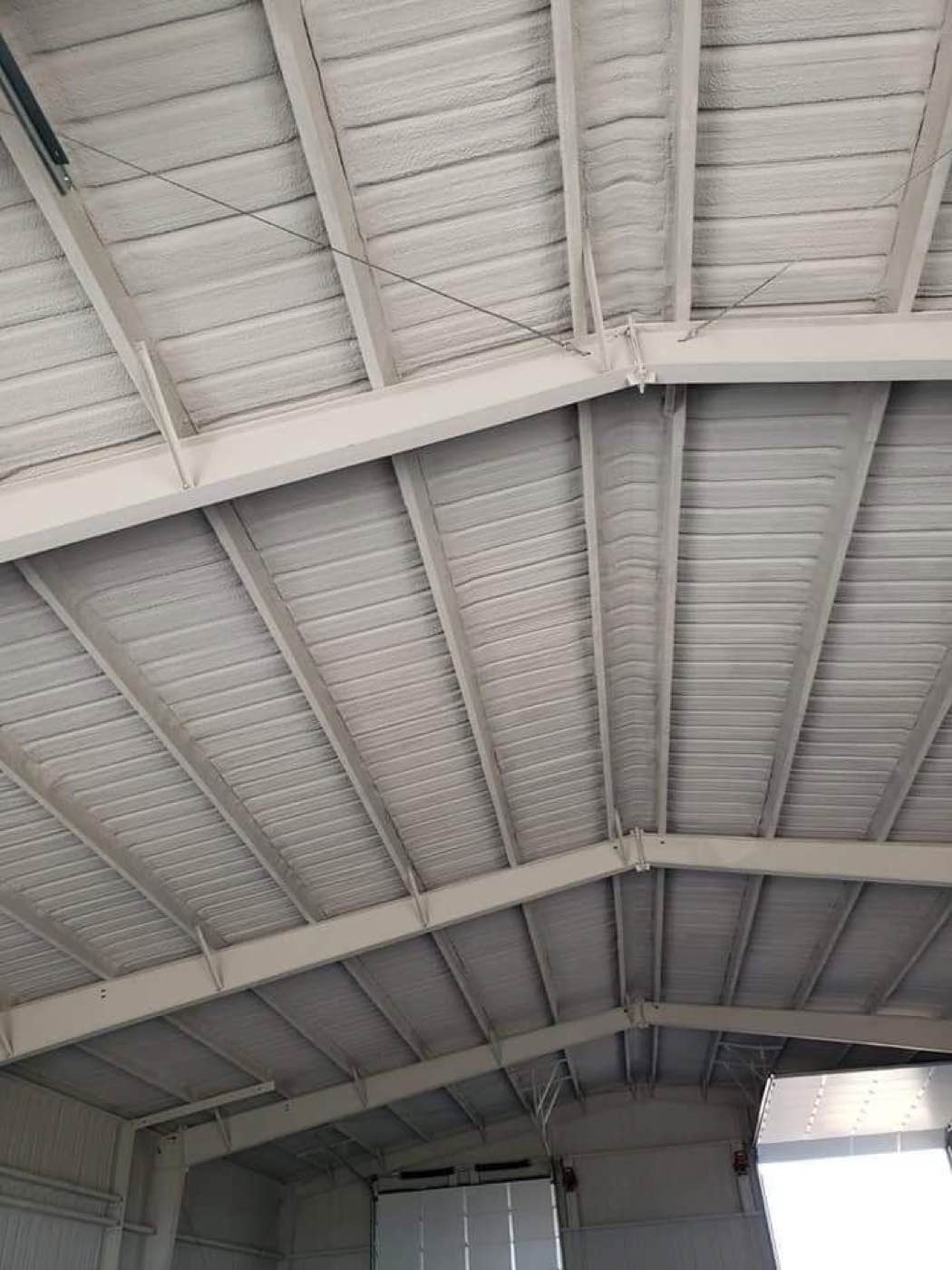
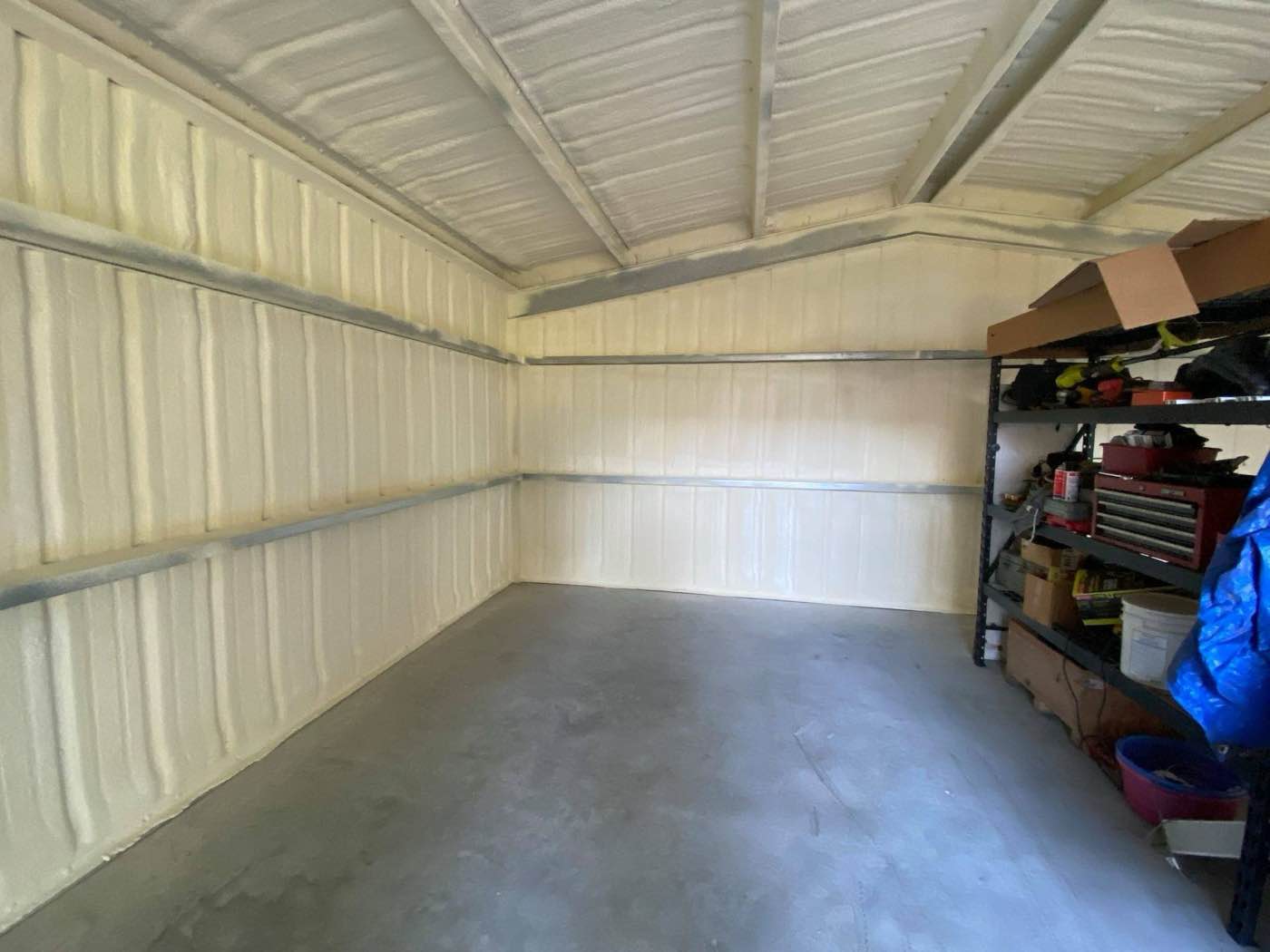
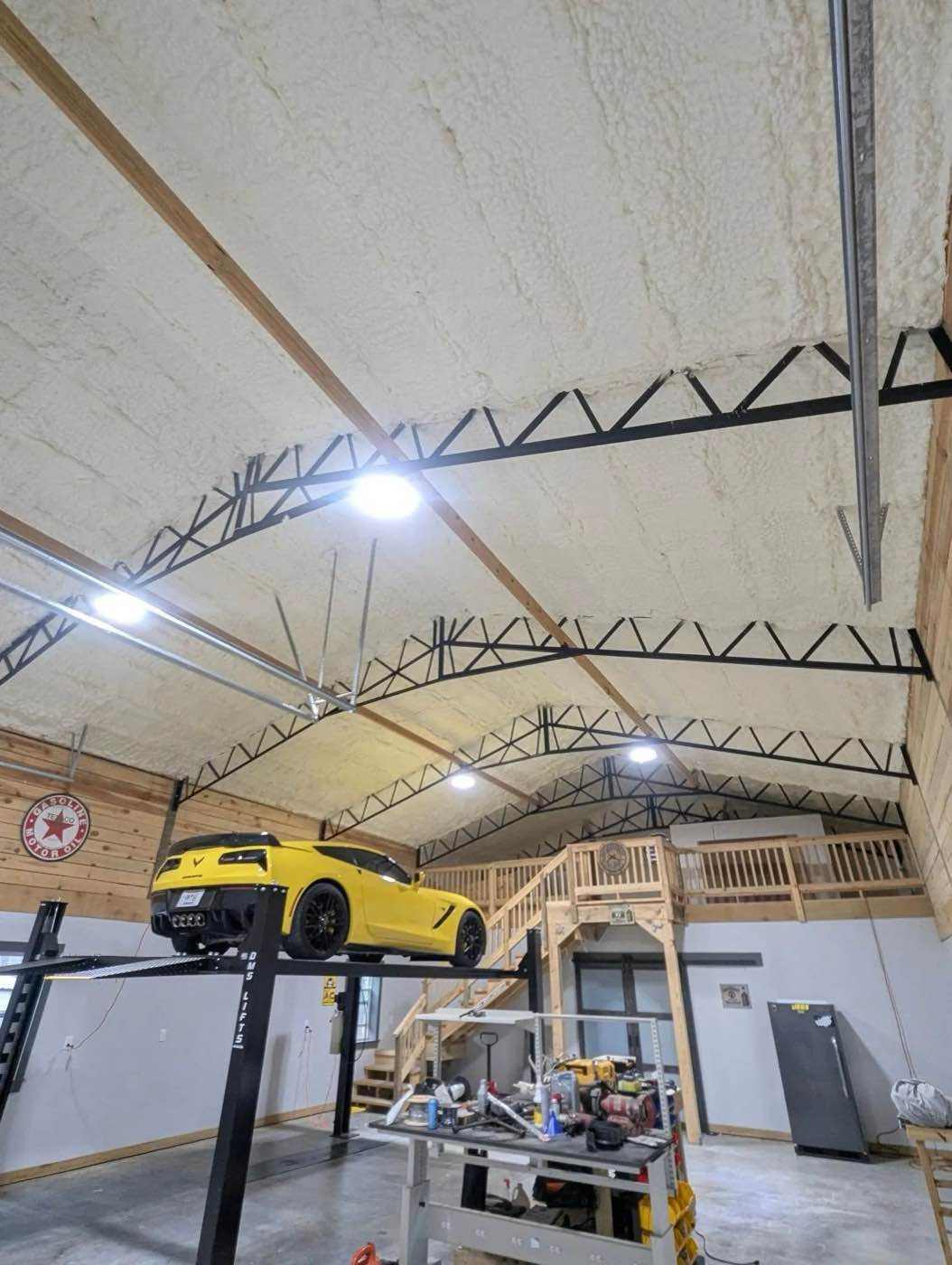
Humid valley air fills the barn every time a door opens. Add moisture from the slab, from damp hay, from animals and from equipment brought in wet, and the air inside the building carries a steady water supply. At night the metal roof radiates its heat to the sky and drops cold, sometimes colder than the air around it, and that moisture condenses directly on the underside of the sheets. On still, foggy river mornings the effect is at its worst: the ceiling drips steadily onto everything below even though it has not rained. Insulation fixes the mechanism, not just the symptom. By bonding foam to the metal, the interior surface stops being cold metal and becomes a surface near the building's own air temperature, so condensation has nowhere to form.
Telling Condensation From a Slow Leak
Before any Waverly barn gets insulated, the first question has to be answered honestly: is the water coming through the roof, or forming under it?
A genuine leak is a point event. It drips during and shortly after rain, it traces back to a fastener, a lap seam, a ridge cap or a panel puncture, and it often draws a single rust streak downhill from the entry point. Condensation is a blanket event. The entire underside of the roof goes damp at once, the drip lines follow every purlin and the ridge, and the timing tracks cold nights and humid days rather than rainfall. The cardboard test settles most arguments: lay dry cardboard under the drip on a clear, cold, rainless night and check it in the morning. Wet cardboard with no rain means condensation, and that means insulation, not roof patching. If the building does have real leaks, those get repaired first, because foam over an active leak hides a problem instead of solving it.
Livestock and Horse Barns Need a Different Plan
Animals change the moisture math inside a barn, and a building that houses horses or cattle cannot be sealed the way a storage shed can.
Livestock put a surprising amount of moisture into the air just by breathing, and bedding and washdown water add more. That humidity is exactly what condenses on a bare roof, so these barns drip harder than equipment sheds. But animals also need continuous fresh air, which means the ventilation plan matters as much as the insulation plan. Our approach is to foam the roof underside to eliminate the cold condensing surface while preserving the building's designed airflow, whether that is a functional ridge vent, eave intake, or simply the gable openings the barn was built with. Sealing a livestock barn completely tight without thinking about air exchange trades a drip problem for an air quality problem, and that is not a trade we will make for you. Larger mixed-use and commercial farm buildings are covered on our commercial spray foam page.
Old Barns, New Barns: What Changes
Humphreys County has both ends of the spectrum: barns raised decades ago and new post-frame buildings going up on working land, and the insulation approach differs between them.
On an existing barn, the job starts with assessment. Panels must be sound, fasteners tight, active leaks fixed, and any failed fibreglass blanket removed before foam goes on. The work happens around the building's contents, in phases, from a lift. On a new build, everything is simpler and cheaper: we spray after the shell is dried in and before liner panels or interior finishes, with full access and nothing to mask. If you are pricing a new barn, building the insulation into the construction schedule costs less than retrofitting the same building later, and it avoids the years of condensation damage that accumulate in between. Our full range of work is listed on the services page.
Serving Waverly and Humphreys County
Waverly and the farms around it are a regular run for our crews, not a special trip.
We serve the town and the wider county, including McEwen, New Johnsonville and Erin, as well as properties toward Camden across the river. The full coverage area is on our serving area page.
Waverly Pole Barn Insulation FAQs
Get Your Free Estimate
A barn that drips on the hay and the herd does not have to stay that way, and the fix usually costs less than a season of spoiled feed and rusted equipment.
Call (615) 492-9376 or request an estimate and we will come walk the building, sort condensation from leaks, and price the insulation for how your barn actually works.