
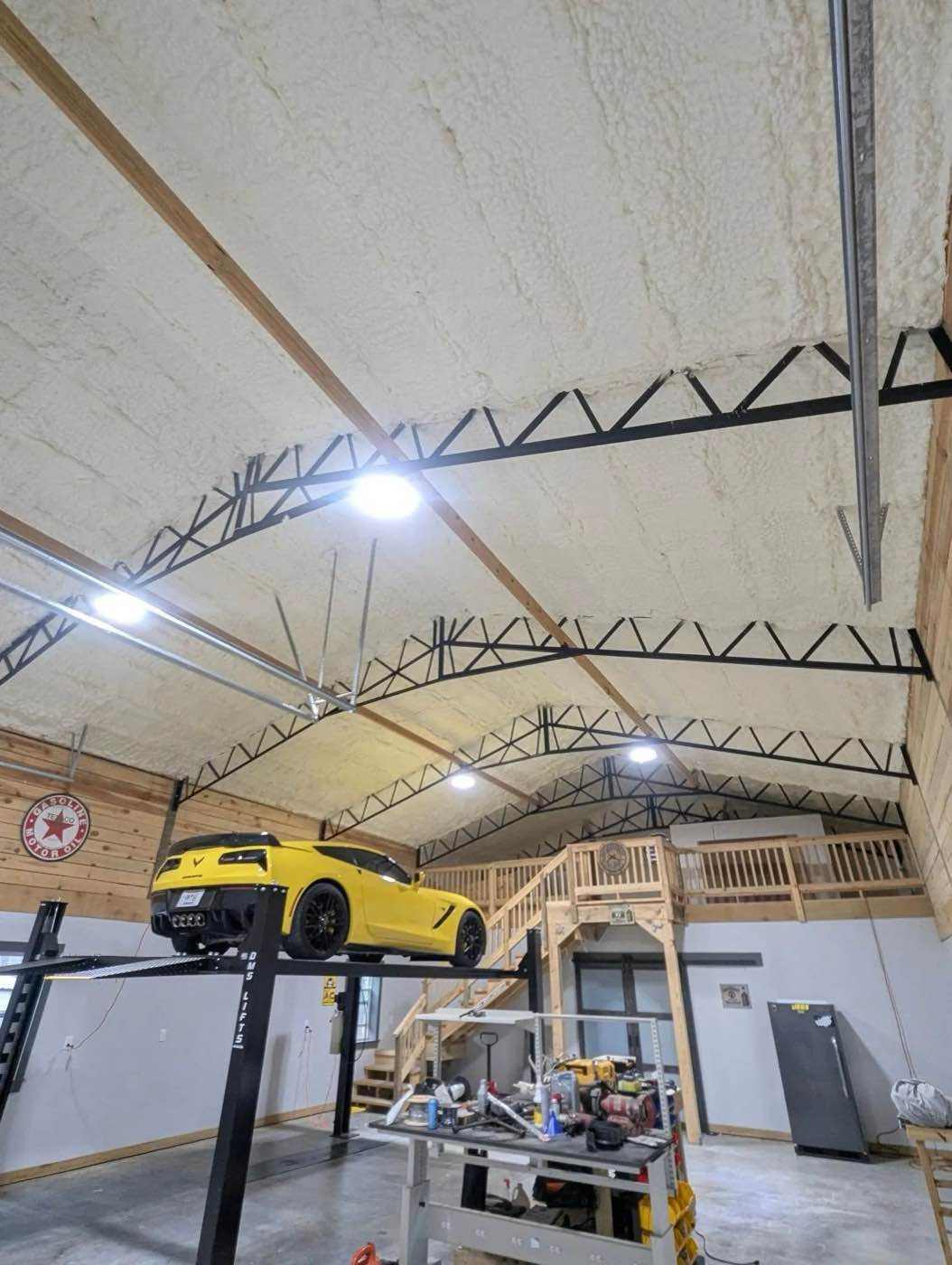
Pole Barn Insulation in Dickson, TN
Pole barn insulation in Dickson, TN for equipment barns, shops and metal buildings. Stop condensation and heat loss. Call (615) 492-9376 for an estimate.
Dickson runs on equipment. Past the city streets the land opens into pasture and row ground, and nearly every property out there has at least one pole barn: a metal-skinned equipment shed for the tractor and implements, a detached workshop behind the house, or a tall machinery barn with open bays. Post-frame construction went up fast and stayed affordable, but most of those buildings were raised with bare metal roof panels and no insulation plan. That worked fine until the first hard cold snap, when humid daytime air met a roof sheet chilled overnight and the inside of the barn started dripping on everything parked below it.
Volunteer FoamPros LLC is a family-owned, veteran-operated insulation contractor based in Burns, right here in Dickson County, and pole barns are work we do every week. If your building sweats, rusts your tools, or stays too cold to work in through January, call (615) 492-9376 or request an estimate and we will come look at the building itself.
Condensation or a Roof Leak: How to Tell
The most common call we get from Dickson barn owners starts the same way: "My roof leaks, but only sometimes." Nine times out of ten it is not a leak at all.
A real roof leak is local. It shows up during or right after rain, it drips from one spot tied to a fastener penetration, a ridge cap seam, or a damaged panel, and it often leaves a single rust trail running downhill from the entry point. Condensation is the opposite. It forms as a thin, even film across the entire underside of the roof sheets, worst on clear cold mornings that follow mild humid days, and it drips from the ridge line and along every purlin at once. If the whole ceiling is damp and it has not rained in two days, that is condensation.
There is a simple field test. On a dry, cold morning, run your hand along the underside of a roof sheet. If it comes away wet everywhere, moisture is condensing out of the air inside your barn, not coming through the metal. You can also lay cardboard under the drip line overnight and check the weather: wet cardboard on a dry night confirms it. This distinction matters because no amount of roof patching fixes condensation, and insulation does not fix a genuinely failed panel. We help you sort out which problem you have before any work is priced.
Why Dickson Barns Sweat All Winter
The physics are simple and the Middle Tennessee climate feeds them perfectly. Metal conducts heat fast, so on a cold clear night a roof sheet radiates its warmth to the sky and drops several degrees below the air temperature inside the barn.
Meanwhile the air inside the building is carrying moisture from every direction: damp concrete slabs, wet implements parked after fieldwork, vehicles driven in with rain on them, livestock breath, and humid Tennessee air that never really dries out between weather systems. When that moist indoor air touches the cold underside of the roof, it gives up its water right there on the metal. The barn effectively makes its own rain, every cold night, all winter. Dickson sits in a part of the state where winter temperatures swing above and below freezing within the same week, so the cycle repeats constantly instead of settling into a dry deep freeze. That is why the drip damage accumulates even in buildings that seem tight.
Sagging Fibreglass Blankets Fail From the Top Down
Many pole barns around Dickson were built with a fibreglass blanket draped between the roof sheets and the purlins. It looked insulated on day one. Look up at it now and you will likely see the problem.
Those blankets were held by facing tabs, tape and friction. Over the years the facing tears, the tabs let go, and gravity pulls the blanket down off the metal. The moment a gap opens between the insulation and the roof sheet, moist barn air flows into that space and condenses against the cold metal exactly as before, except now the water soaks into fibreglass instead of dripping off bare steel. Wet fibreglass gets heavy, sags further, compresses, and loses most of its rated R-value, and the vinyl facing becomes a surface for mould. The blanket does not fail all at once. It fails from the top down, one sagging bay at a time, while the owner assumes the building is still insulated. Our fibreglass batt insulation page covers where fibreglass still makes sense, but draped blankets under metal roofs are not it.
Spraying Around Equipment You Cannot Move Out
A working equipment barn rarely empties. The tractor, the planter, the side by side and the tool benches all have to live somewhere, and that somewhere is usually the barn we are insulating.
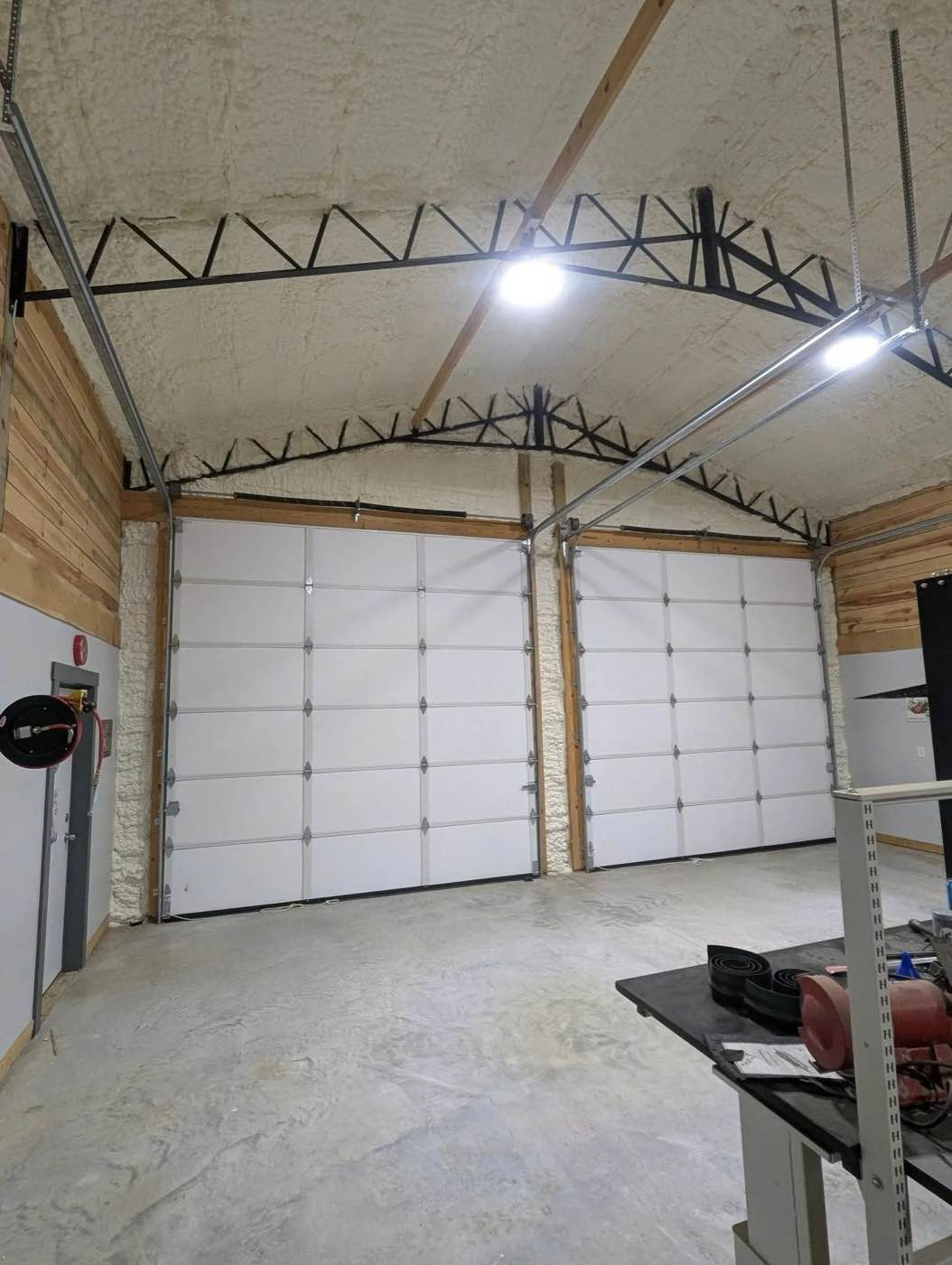
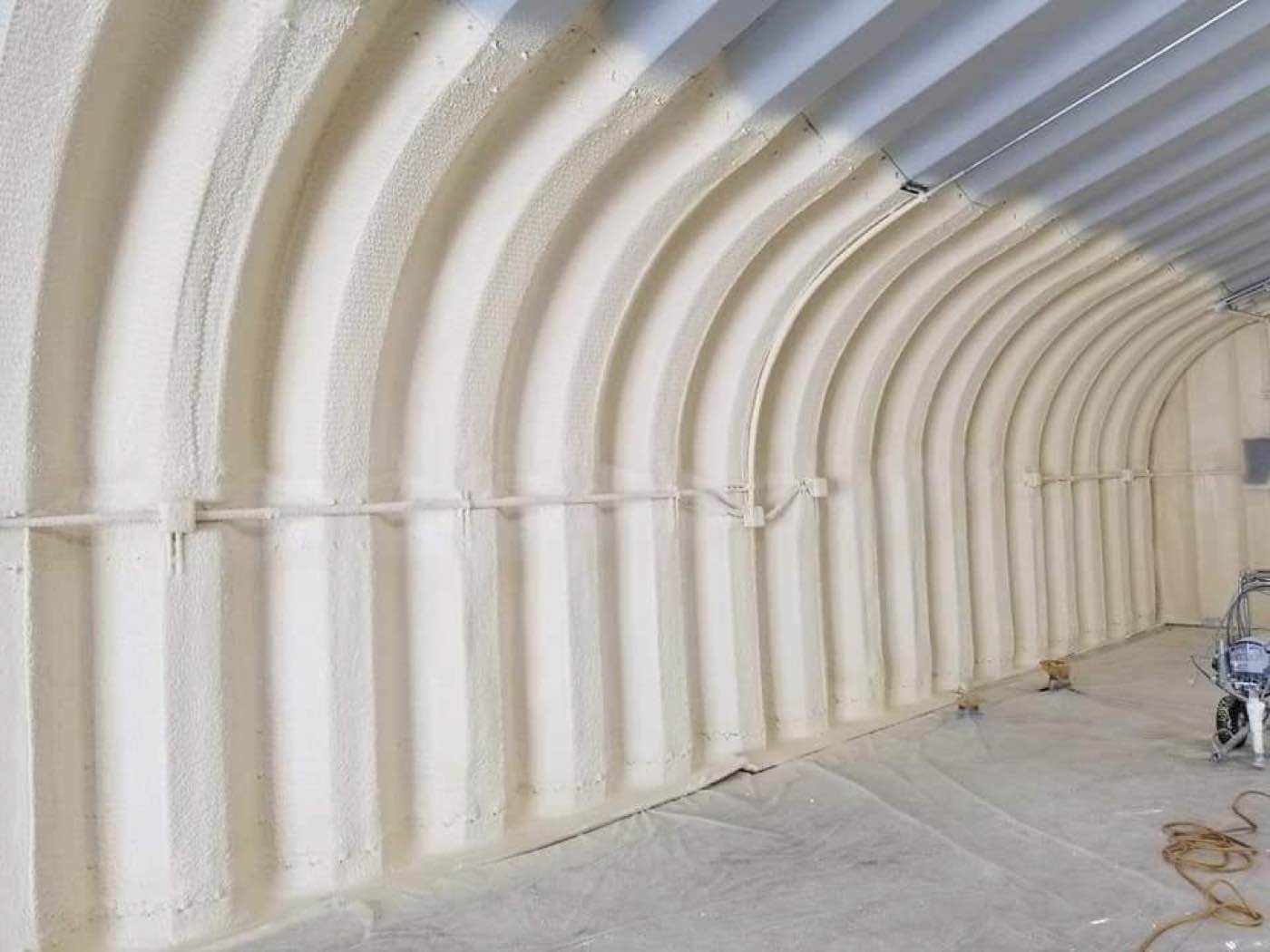
That is normal for us. Closed cell spray foam is applied from a lift directly to the underside of the roof and the inside of the wall panels, so the work happens overhead, not on your floor. Anything that can roll gets moved to the centre of the building and tarped; anything that cannot move gets masked. We control overspray carefully and we can phase the job, doing half the roof at a time, so the building never fully leaves service. You keep using the barn while it gets insulated. The one firm rule is that people and animals stay clear of the active spray area until the foam has cured and the space has been ventilated, and we walk you through that timing before we start.
A Dry Shell or a Heated Workshop
Not every Dickson pole barn needs the same job, and this decision should happen before we price anything.
A dry shell means we insulate and air seal the roof and walls purely to stop condensation and take the edge off temperature swings. The building is not heated, but nothing inside gets dripped on, tools stop rusting, and stored feed stays dry. That is the right answer for most pure storage barns. A heated workshop is a different build: the full envelope gets insulated, the big doors get detailed, and the space can hold temperature so a modest heater keeps it workable all winter. Closed cell foam delivers roughly R-6 to R-7 per inch and air seals in the same pass, which is why it suits both goals. If you are weighing the two, our pole barn insulation service page breaks down the options, and larger heated shop and commercial metal buildings are covered on our commercial spray foam page.
Serving Dickson and Dickson County
Our shop is in Burns, so Dickson is home ground, not a service call from out of town.
We cover the whole county and the surrounding area, including Charlotte, White Bluff, Burns and Kingston Springs, as well as the rural properties between them where most of the barns actually stand. See the full footprint on our serving area page.
Dickson Pole Barn Insulation FAQs
Get Your Free Estimate
If your Dickson barn drips on the equipment, sweats all winter, or is too cold to work in, insulation is the fix and we are fifteen minutes away.
Call (615) 492-9376 or request an estimate and we will come out, look at the building, and tell you straight whether you need a dry shell, a heated envelope, or a roof repair first.