
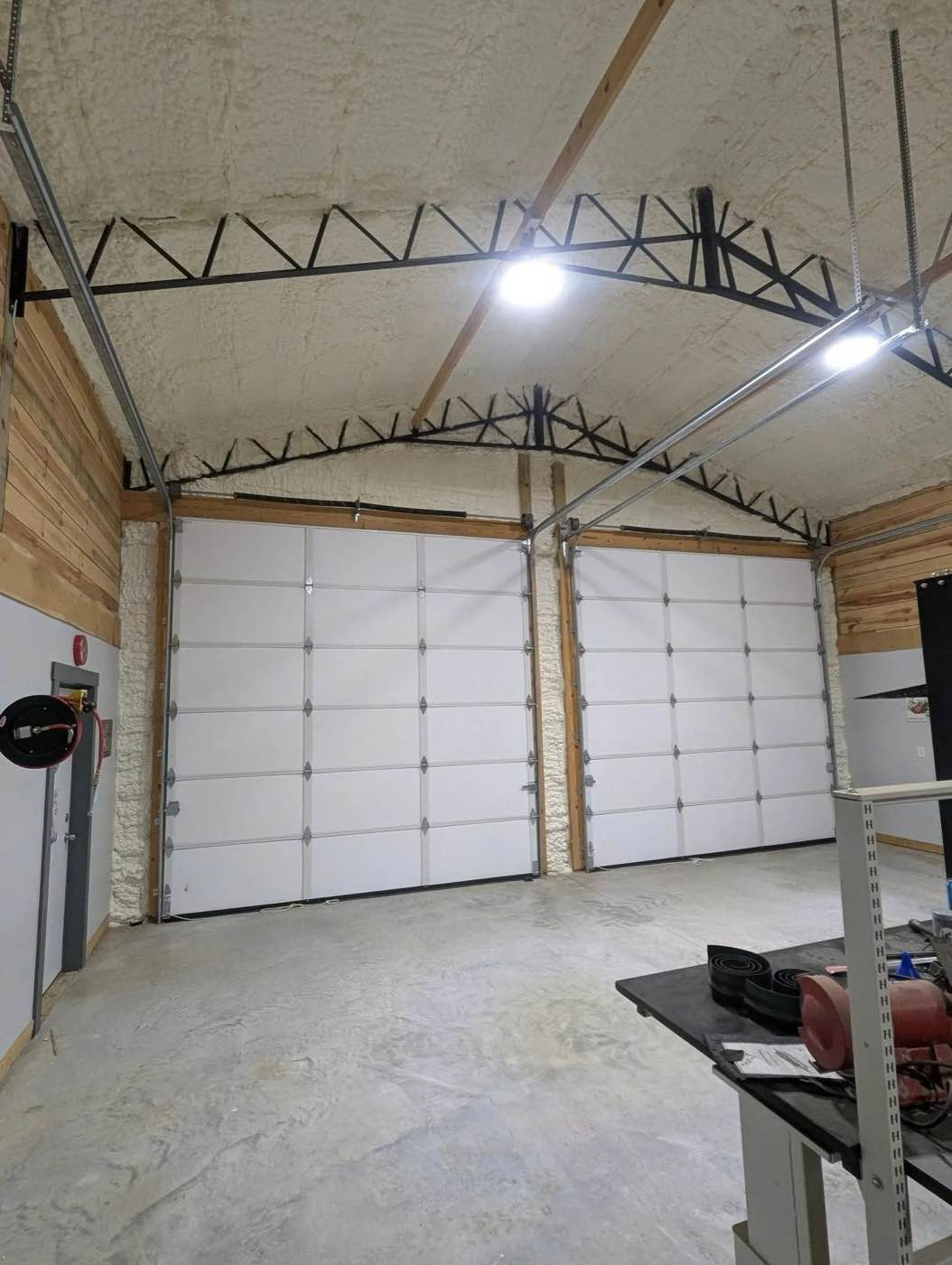
Pole Barn Insulation in Charlotte, TN
Pole barn insulation in Charlotte, TN: spray foam that bonds to metal, stops drips and outlasts sagging blankets. Call (615) 492-9376 for an estimate.
Charlotte is the seat of Dickson County, a small courthouse town ringed by working farms, and the barns around it show their age honestly. A lot of the post-frame buildings out here went up decades ago with a fibreglass blanket tucked under the roof metal, and for years that was enough. Now those blankets are sagging off the purlins, the drip stains are spreading across the hay, and owners are discovering that the insulation they thought they had stopped working a long time ago. Cattle barns, hay sheds, equipment storage and old workshop buildings all share the same failure pattern.
Volunteer FoamPros LLC is based in Burns, about as close to Charlotte as a contractor can be, and retrofitting older pole barns is work we know well. Call (615) 492-9376 or request an estimate and we will walk the building with you before quoting anything.
What a Sagging Fibreglass Blanket Really Costs You
A fallen insulation blanket is not just ugly. It is an active moisture problem sitting over everything you store.
The blanket was installed at build time, stretched between the roof sheets and the purlins and held by facing tabs and adhesive. Years of heat cycles, vibration and gravity tear the facing and pull the tabs loose. Once the blanket drops away from the metal, humid barn air fills the new gap and condenses against the cold roof sheet just as it would with no insulation at all. The difference is that now the water wicks into the fibreglass. Wet fibreglass is heavy fibreglass, so the sag accelerates, the material compresses, and its R-value collapses. Meanwhile the facing stays damp long enough to grow mould, and the whole assembly drips dirty water instead of clean condensation. Owners see the stained vinyl and assume the roof leaks. Usually the roof is fine. The insulation is what failed, and it fails from the top down, bay by bay.
Closed Cell Foam Bonds Where Blankets Let Go
Spray foam solves the sagging problem permanently because there is nothing left to sag. Closed cell foam is sprayed as a liquid directly onto the underside of the roof metal, where it expands, grips the panel and cures into a rigid, closed-pore layer.
That bond changes everything about how the assembly behaves. There is no air gap, so there is nowhere for moist air to hide against cold metal, which is the entire mechanism of condensation. The foam air seals and insulates in a single pass at roughly R-6 to R-7 per inch, and because it is rigid it also stiffens the roof panels it adheres to. Twenty years from now it will be exactly where we put it. If you want to compare approaches, the fibreglass batt insulation page explains where fibreglass genuinely belongs, which is framed cavities, not draped under metal roofing.
Retrofit Work on Older Charlotte Barns
Retrofitting is most of what we do around Charlotte, and an honest retrofit starts with an honest look at the building rather than a spray rig.
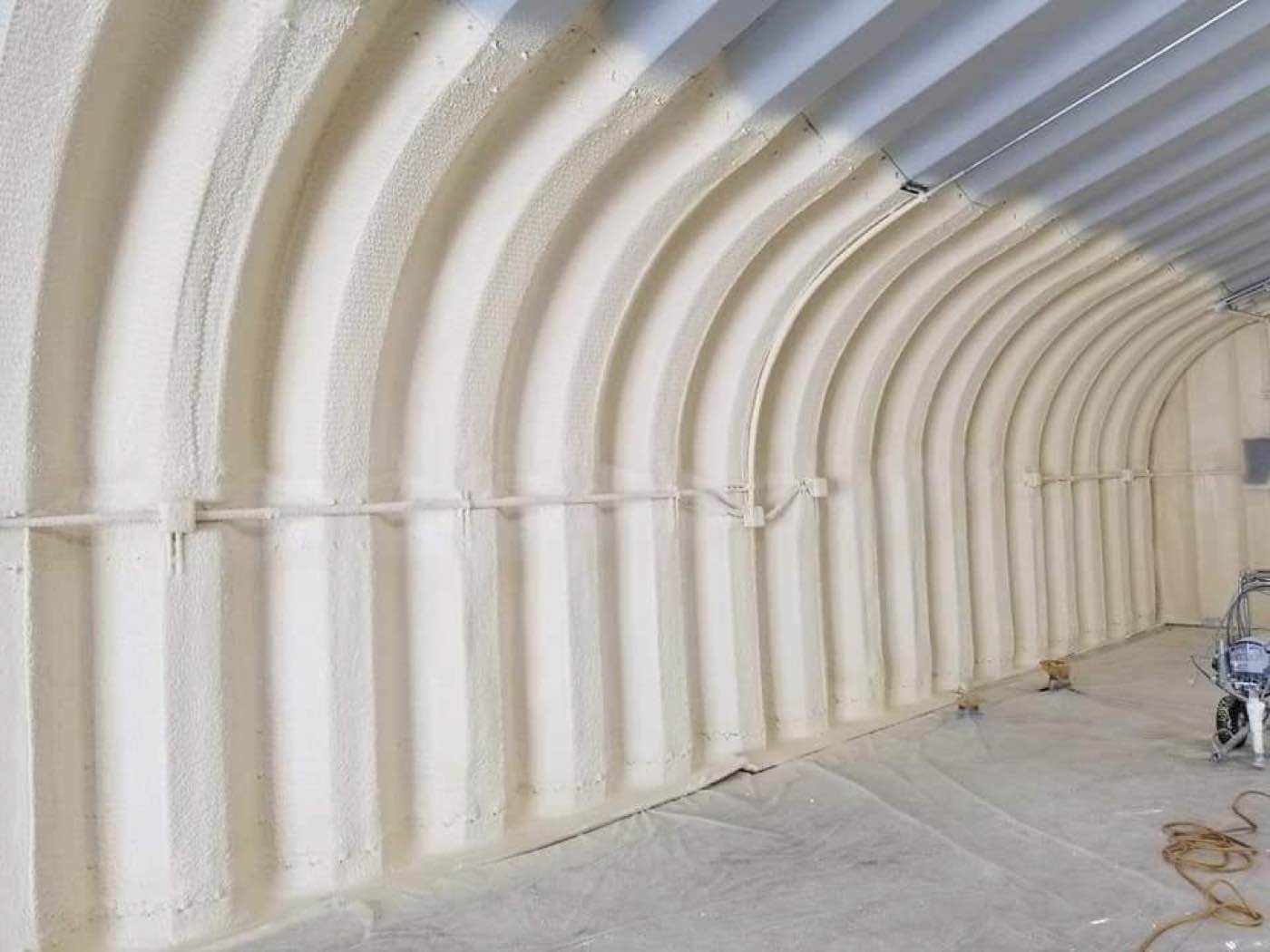
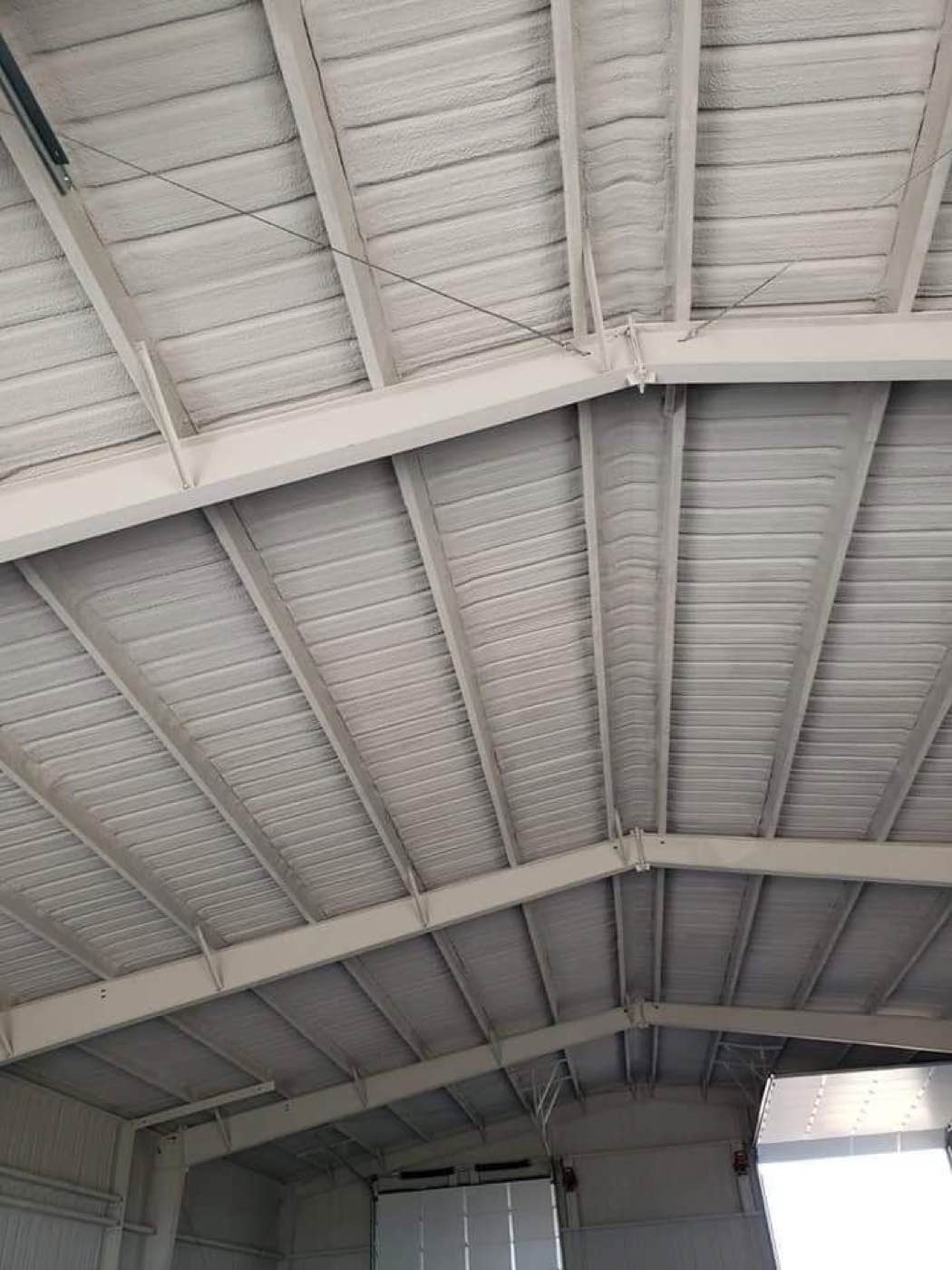
Before foam goes on, the roof panels need to be sound: fasteners that still bite, no active leaks, no panels rusted through. Foam bonds to dry, reasonably clean metal, so heavy rust scale or decades of cobweb and dust get addressed first. Old fibreglass that is hanging or soaked comes down; leaving it in place would trap moisture against the new work. Then the foam goes on from a lift, sprayed to the roof underside and the wall panels, with purlins left exposed or encapsulated depending on how the building is used. The result is an old barn with a modern thermal envelope, without tearing the roof off to get there. You can see the range of buildings we handle on our services page.
Drips, Rust Streaks and Mould: Reading the Damage
Charlotte barn owners can diagnose a lot themselves before we ever arrive, and a few minutes with a flashlight separates condensation from a true roof leak.
Condensation announces itself as a uniform damp film across every roof sheet, heaviest along the ridge and the purlin lines, worst on cold still mornings after a mild humid spell, with no relationship to when it last rained. A real leak is a point source: one drip, one rust streak running from a fastener or a lap seam, active only during and after rain. Mould tells its own story. Mould on the vinyl facing of old insulation or on the surface of stored hay means moisture has been present for a long time, which points at chronic condensation rather than a single storm event. Catching the pattern early matters, because years of drip rust out roof panels from below and ruin hay value that far exceeds the cost of fixing the cause.
Choosing How Much of the Barn to Condition
Older farm buildings around Charlotte serve mixed duty: one bay holds hay, another shelters the cattle trailer, a closed room at the end is the workshop. The insulation plan should follow that use rather than treating the whole building as one space.
A pure storage barn needs a dry shell: roof and walls sealed against condensation, no heating, no conditioning cost. A workshop bay wants a real thermal envelope that can hold heat through a January week. Mixed buildings can be split, with foam throughout the roof to kill condensation everywhere and a conditioned envelope only where people work. We lay out those options plainly during the site visit so you are paying for the performance you will actually use. For conditioned spaces that sit over bare ground, our crawl space insulation work often pairs with the barn job when a farmhouse or office space is involved.
Serving Charlotte and Northern Dickson County
Charlotte sits at the centre of our home county, and the farm roads around it are roads we drive weekly.
We serve the town and the surrounding countryside, including Dickson, White Bluff, Vanleer and Cumberland Furnace, along with the rural properties in between. Our full coverage is listed on the serving area page.
Charlotte Pole Barn Insulation FAQs
Get Your Free Estimate
If the insulation in your Charlotte barn is hanging in ribbons or the drip stains keep spreading, the fix is simpler than a new roof.
Call (615) 492-9376 or request an estimate and we will come assess the building, tell you whether the roof is sound enough to insulate, and price the job properly.