
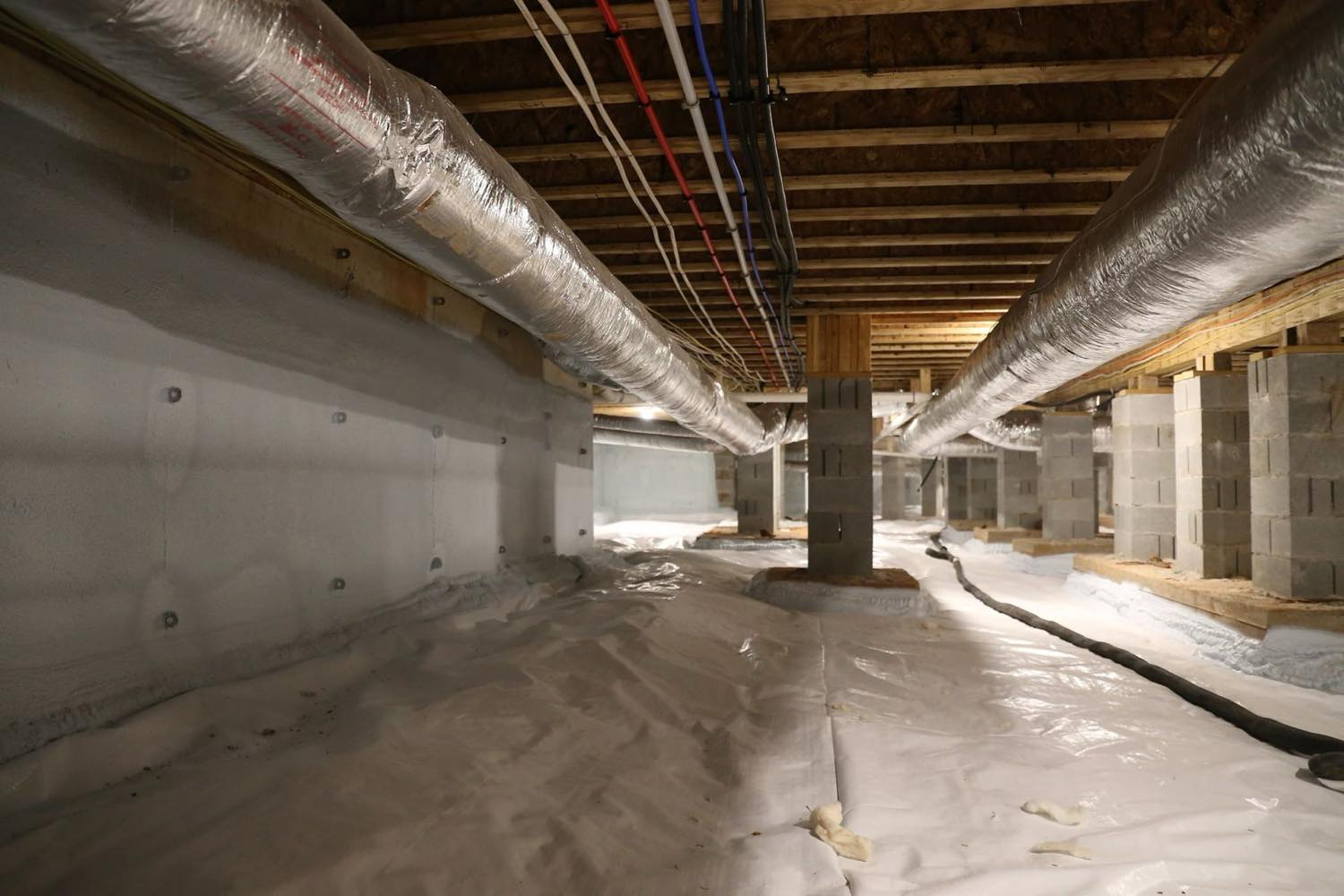
Crawl Space Encapsulation in Parsons, TN
Crawl space encapsulation in Parsons, TN. Liners, sealed vents, drainage and dehumidification for homes west of the Tennessee River. Call (615) 492-9376.
Parsons is about 53.2 miles from our shop in Burns, over in Decatur County on the west side of the Tennessee River. It is the far edge of our regular range, and we still make the trip because crawl spaces out there need the same work as the ones ten minutes from us.
Call (615) 492-9376 or request an estimate.
What Crawl Spaces Look Like Around Parsons
Parsons exists because of a railroad. The town was created around 1889 when Henry Myracle deeded land to the Tennessee Midland Railroad Company, and the railroad's own improvement company laid the place out. Decaturville, the county seat, sits five miles south on US 641, and old Perryville, the oldest settlement in the county, is five miles east along the Tennessee River.
A railroad town from 1889 gives you a particular kind of building stock. The older houses near the centre of town went up when a crawl space was just the gap under the floor, and ventilation meant whatever air felt like moving through. Around those, and out into the county, are the farmhouses and rural homes that followed, most of them raised on block or pier foundations with vented, dirt-floored crawl spaces.
The geography does the rest. River counties in West Tennessee have humid summers and ground that holds moisture, and the land between Parsons and the river bottoms is no exception. The line it draws for crawl spaces is simpler: everything near it is damp for more of the year.
A vented crawl space under an older house, fibreglass batts that have absorbed moisture until they sagged or fell, floor joists carrying decades of damp summers, and a musty smell in the rooms above that cleaning never quite fixes. The design assumption underneath it, that vents would keep it dry, was wrong for this climate. Encapsulation replaces that assumption with something that works.
What a Full Encapsulation Involves
Encapsulation closes the crawl space off from the ground and the weather, then manages the air inside it.
A sealed ground liner. A heavy reinforced vapour barrier covers the entire floor, runs up the walls and wraps the piers, with every seam taped and every edge sealed. Ground moisture is the main moisture source in any crawl space, and the liner is what shuts it off.
Closed vents and a sealed rim. Foundation vents get sealed shut for good. In a Decatur County summer, an open vent admits warm humid air that condenses on the cooler framing under the house. The rim joist, the leakiest part of most foundations, gets air sealed at the same time.
Drainage and a sump where water comes in. Some crawl spaces near the river side of the county take on water after heavy rain. Those get a perimeter drain and sump pump installed before the liner goes down, so water is collected and removed instead of trapped.
Controlled humidity. A sealed crawl space still needs its air dried. A crawl space dehumidifier keeps the space dry through the humid season, which is when unconditioned spaces here do their damage.
Where We Would Start in Parsons
- Older homes near the original town grid. Pre-war and early postwar houses with vented crawl spaces that have never been touched. These gain the most from a full system.
- Houses toward the river bottoms. The closer to the Tennessee River, the longer the damp season. Drainage and sealing together, not one without the other.
- Rural and farm properties on piers. Common outside town. The liner wraps each pier and the perimeter seals at the skirt line, turning an open underfloor into a closed space.
- Any crawl space with fallen fibreglass. Batts on the ground mean the moisture has been winning for years. Remove them, dry the space, seal it.
- Homes with persistent musty smells or cupped flooring. Both usually start below the floor. The crawl space is where the fix belongs.
Why Workmanship Decides the Result
What separates a system that performs from one that disappoints is the order of the work and the finish at the edges. A crawl space has to be cleaned out and dried before lining. Drainage has to be solved before sealing, not after. Seams have to be taped, piers wrapped fully, and the rim sealed end to end.
We quote every job after physically getting under the house, because square footage over the phone tells you nothing about ground water, clearance or the condition of the framing. That is how our crawl space encapsulation work is done across the whole service area, and Parsons is no exception.
Serving Parsons and Decatur County
We work from 2715 Church St Ste B, Burns, TN 37029, and Decatur County is on our regular run. Nearby towns we also serve include Holladay, about 15.4 miles away, Linden, about 16.0 miles, New Johnsonville, about 27.0 miles, and Bruceton, about 27.7 miles.
Parsons Insulation FAQs
Get Your Free Estimate
Free to ask, free to think about.
Call (615) 492-9376 or request an estimate. We will tell you what we would do, what we would leave alone, and what it is worth doing first.