
Crawl Space Encapsulation in Chapmansboro, TN
Crawl space encapsulation in Chapmansboro and Cheatham County. Drainage and conditioning for river bottom and hillside crawl spaces. Call (615) 492-9376.
Chapmansboro is an unincorporated community in Cheatham County, about 20 miles northeast of our shop in Burns. We work across the county line regularly, so inspections there are normal service calls, not special trips.
Call (615) 492-9376 or request an estimate.
The Ground Under Chapmansboro Homes
Cheatham County is defined by water, and that fact runs straight under the houses.
The Cumberland River bisects the county from northwest to southeast, with Ashland City on its northern bank about five miles from Chapmansboro. The Harpeth defines the western border of the county's central portion. Between them lies river bottom and ridge, with hills steep enough that the state has set part aside as the Cheatham State Wildlife Management Area. This is not flat suburban ground, but hollows, slopes and bottomland.
That geography produces two crawl space problems, often on the same road. Homes near the river bottoms sit over ground that stays wet, and a vented crawl space there breathes damp air nearly all year. Homes on slopes get the same result from runoff: every rain sends surface water and spring seepage downhill, and a crawl space cut into the low side is where it ends up. We regularly find hillside crawl spaces here with staining on the downhill foundation wall and dry ground everywhere else.
The housing adds the third factor: older farmhouses and single wides alongside newer site built homes, most on crawl spaces rather than basements or slabs. Older rural construction often means bare dirt or a skim of plastic, with fibreglass batts in the floor fighting humidity since installation. Batts lose that fight every time: they absorb moisture, get heavy, pull away from the subfloor and end up on the ground.
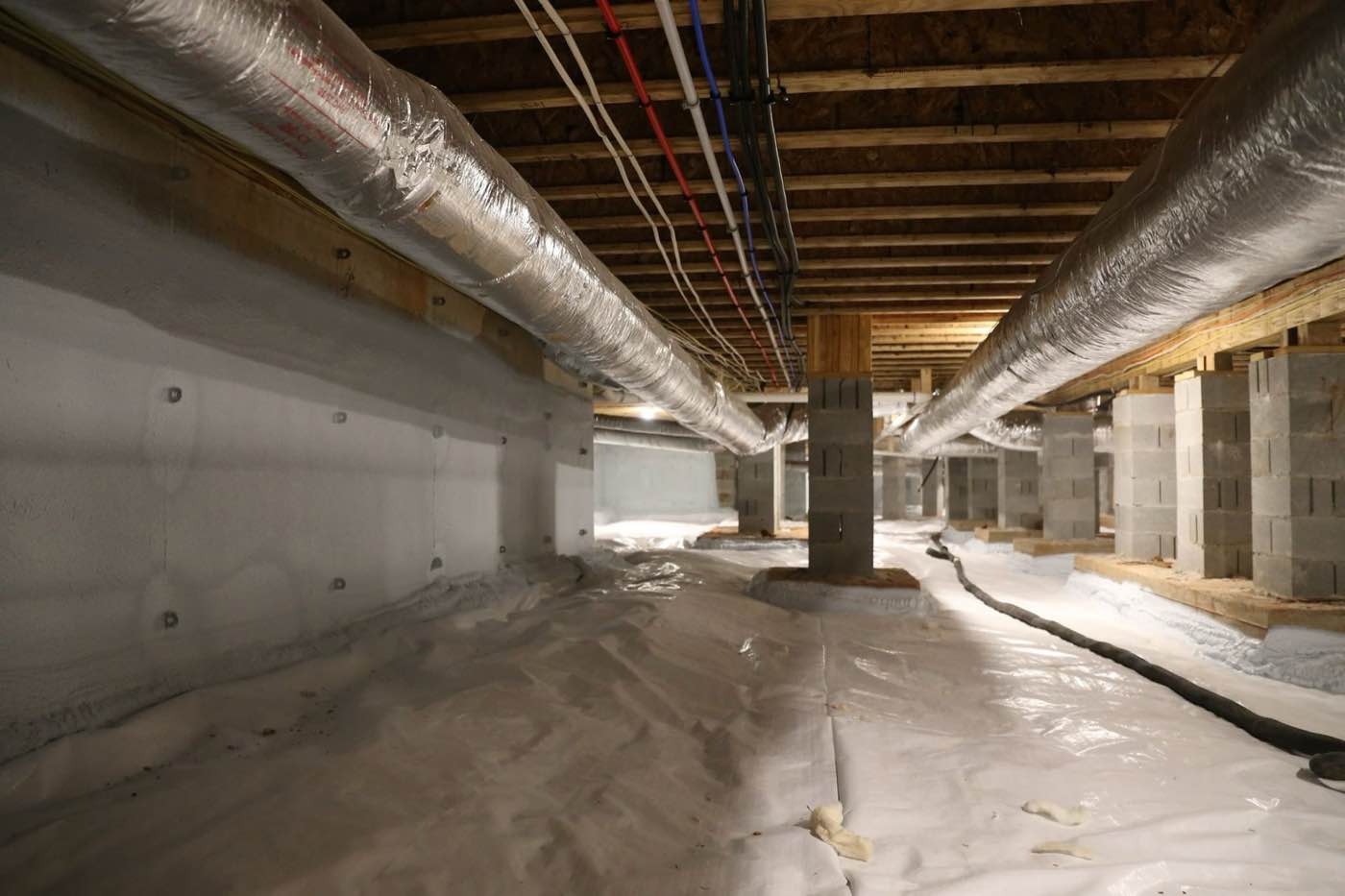
A proper crawl space encapsulation changes what the space is. Instead of outdoor air and bare ground under the house, you get a sealed, lined, conditioned space that behaves like part of the building.
How an Encapsulation System Goes Together
The work has four parts, and the order matters.
Drainage is first, always. Bulk water entering the crawl space, from the river bottom water table or slope runoff, gets solved before anything is sealed. Depending on the source, that can mean grading, a perimeter drain or a sump. A liner over active water entry does not fix the water; it hides it, and it will be found at the worst possible time.
The liner is second. A heavy reinforced membrane covers the entire floor, runs up foundation walls and wraps every pier. Seams are overlapped and taped, edges sealed to the wall. On rocky rural crawl spaces the liner must survive future access, which is why thin plastic is not an option.
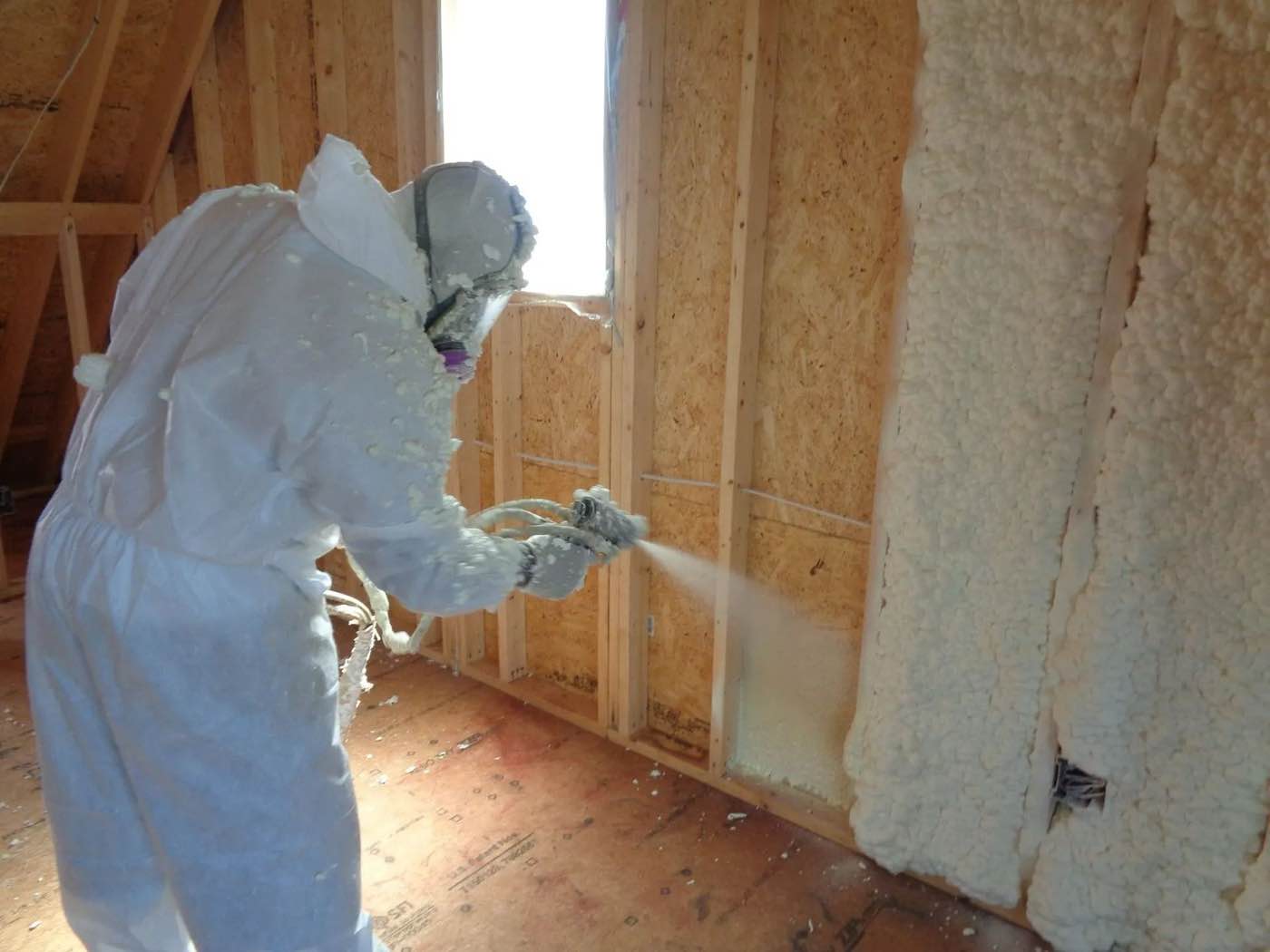
Sealing is third. Foundation vents are closed and sealed, because a conditioned crawl space cannot be open to weather. The rim joist, sill plate and every penetration get air sealed, and closed-cell spray foam does double duty: it seals and insulates the rim in one pass. Our spray foam insulation work pairs with encapsulation on most jobs for that reason.
Conditioning is last. A sealed crawl space still needs humidity managed through a Tennessee summer, either with a small supply of conditioned air or a dedicated dehumidifier. That keeps joists dry in August instead of merely drier than before.
Where It Pays Off First in Chapmansboro
- Homes near the river bottoms. Constant ground moisture under a vented crawl space means constant condensation on joists and ducts. A liner and conditioning break that cycle.
- Hillside and hollow lots. If one foundation wall shows water staining after rain, drainage and encapsulation belong in the same conversation.
- Older farmhouses with dirt crawl spaces. Many were built with no vapour barrier at all, and the floor system has absorbed soil moisture since framing.
- Fallen floor insulation. Batts on the ground are a symptom, not the problem. Replacing them without sealing the crawl space buys the same failure again.
- Ductwork in the crawl space. Sweating ducts lose conditioned air and grow condensation. A dry, sealed space protects the system you already paid for.
The Part You Cannot Buy in a Roll
The materials in an encapsulation are available to anyone. What is not on a shelf is judgement about where water is coming from, and patience to detail a liner around forty piers in a space with three feet of clearance.
Most failed encapsulations we see failed the same way: seams untaped, liner stopped at walls instead of sealed up them, vents left open, no conditioning. Each shortcut is invisible from the hatch, and each turns the system back into a vented crawl space with a plastic floor. We crawl and photograph the whole space before quoting, and the estimate says exactly which of the four parts your crawl space needs.
Serving Chapmansboro and Cheatham County
We run out of 2715 Church St Ste B, Burns, TN 37029, and Cheatham County is inside the ground we cover without a travel surcharge. Nearby communities we also serve include Ashland City, about 5 miles away, Coopertown, about 13 miles, Charlotte, about 14.6 miles, and White Bluff, about 14.8 miles.
See our full crawl space encapsulation service or the complete service area.
Chapmansboro Insulation FAQs
Get Your Free Estimate
The visit costs you nothing and commits you to nothing.
Call (615) 492-9376 or request an estimate. We walk the building with you, explain what we would do and why, and put it in writing.