
Commercial Insulation in Franklin, TN
Commercial insulation in Franklin, TN for offices, retail spaces, restaurants, and warehouses. Closed-cell spray foam done right. Call (615) 492-9376.
Franklin's commercial building stock is as varied as its economy. Office buildings and professional suites sit alongside retail centres, restaurants and hospitality kitchens, medical and service spaces, and the light industrial and warehouse buildings that support it all on the edges of town. Each building type fails differently when insulation is an afterthought. Offices develop hot and cold zones that tenants complain about. Restaurant kitchens battle humidity and grease-laden air against undersized envelopes. Warehouses bake under summer sun. Williamson County's growth keeps producing new buildings, but plenty of existing ones still run on thin insulation and hope.
Volunteer FoamPros LLC is a family-owned, veteran-operated insulation contractor serving Franklin from our shop in Burns. Established 2023, fully licensed and insured, with 20 years of combined team experience. Commercial insulation in Franklin, TN means matching the right system to the right building. Call (615) 492-9376 or request an estimate to get started.
Franklin's Commercial Building Mix, and What Each Type Needs
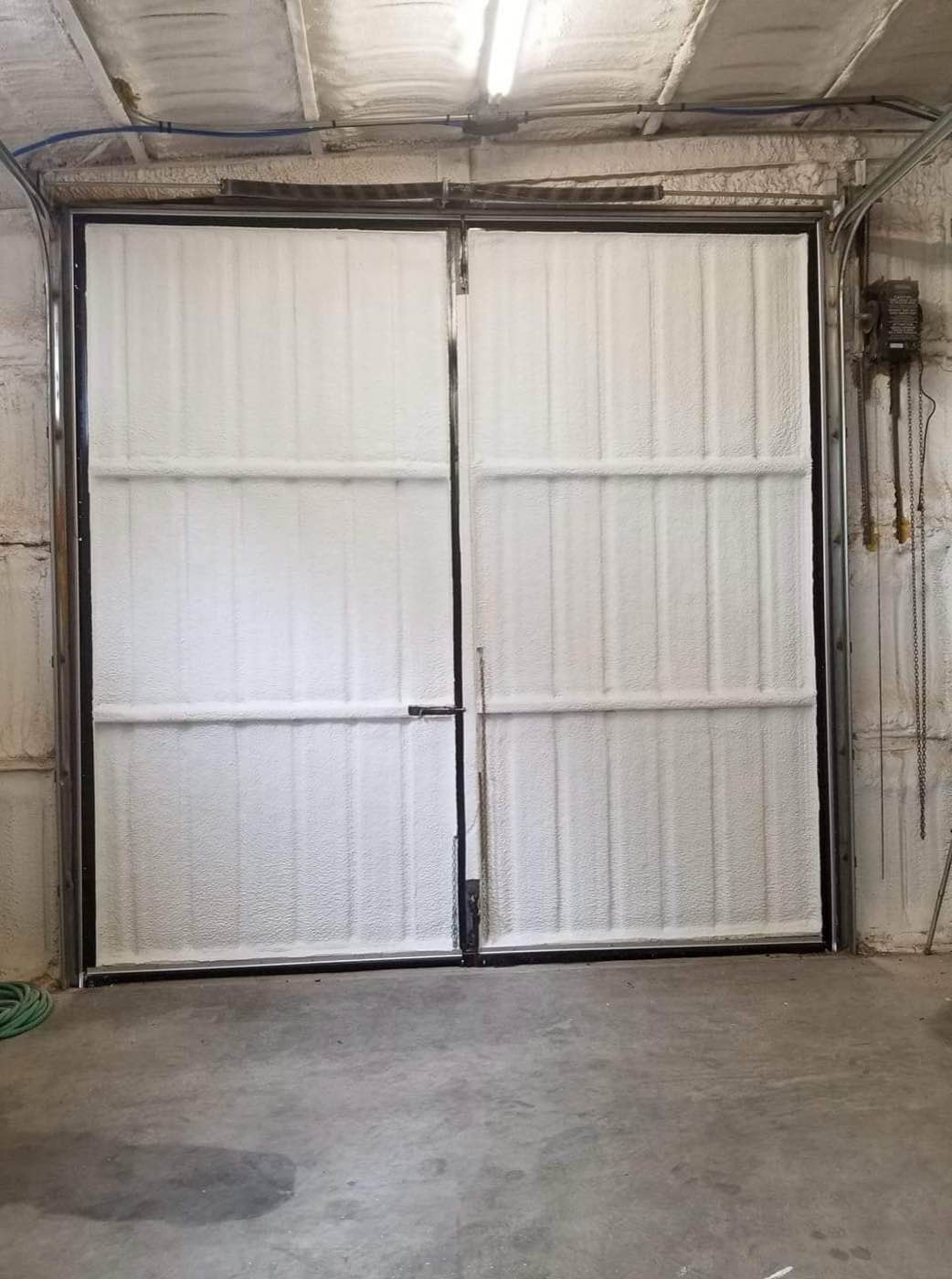
No single insulation prescription fits Franklin's market, because the buildings themselves differ so much. Office and professional buildings need consistent comfort across floors and suites, which means sealing the envelope against air leakage as much as adding R-value. Spray foam excels here because it does both in one application, closing the gaps around penetrations, rim areas, and irregular framing that batt products leave open.
Retail fit-outs are a constant in a growing market, and tenant improvement projects regularly expose roof decks and demising walls that were never insulated to a real standard. Getting foam into those assemblies during a renovation is far cheaper than living with the energy bills afterward. Restaurant and hospitality kitchens present the toughest environment: high moisture, high heat, and refrigeration equipment all in one footprint. Walk-in coolers and freezers need continuous closed-cell foam with a true vapour seal, and kitchen ceilings need insulation that will not absorb moisture or harbour mould. Light industrial and warehouse space on Franklin's edges needs roof deck insulation to stop solar heat gain and condensation. Our commercial spray foam work covers every one of these building types across the metro.
Condensation and Humidity in Enclosed Commercial Spaces
Williamson County's climate loads commercial buildings with moisture for most of the year, and enclosed spaces feel it first. Metal roof decks on uninsulated buildings condense on cool mornings, dripping onto stored goods and finished ceilings. Interior spaces with poor envelope sealing pull humid outdoor air through every gap, forcing HVAC systems to remove moisture they were never sized to handle and leaving occupants clammy even when the thermostat reads correctly.
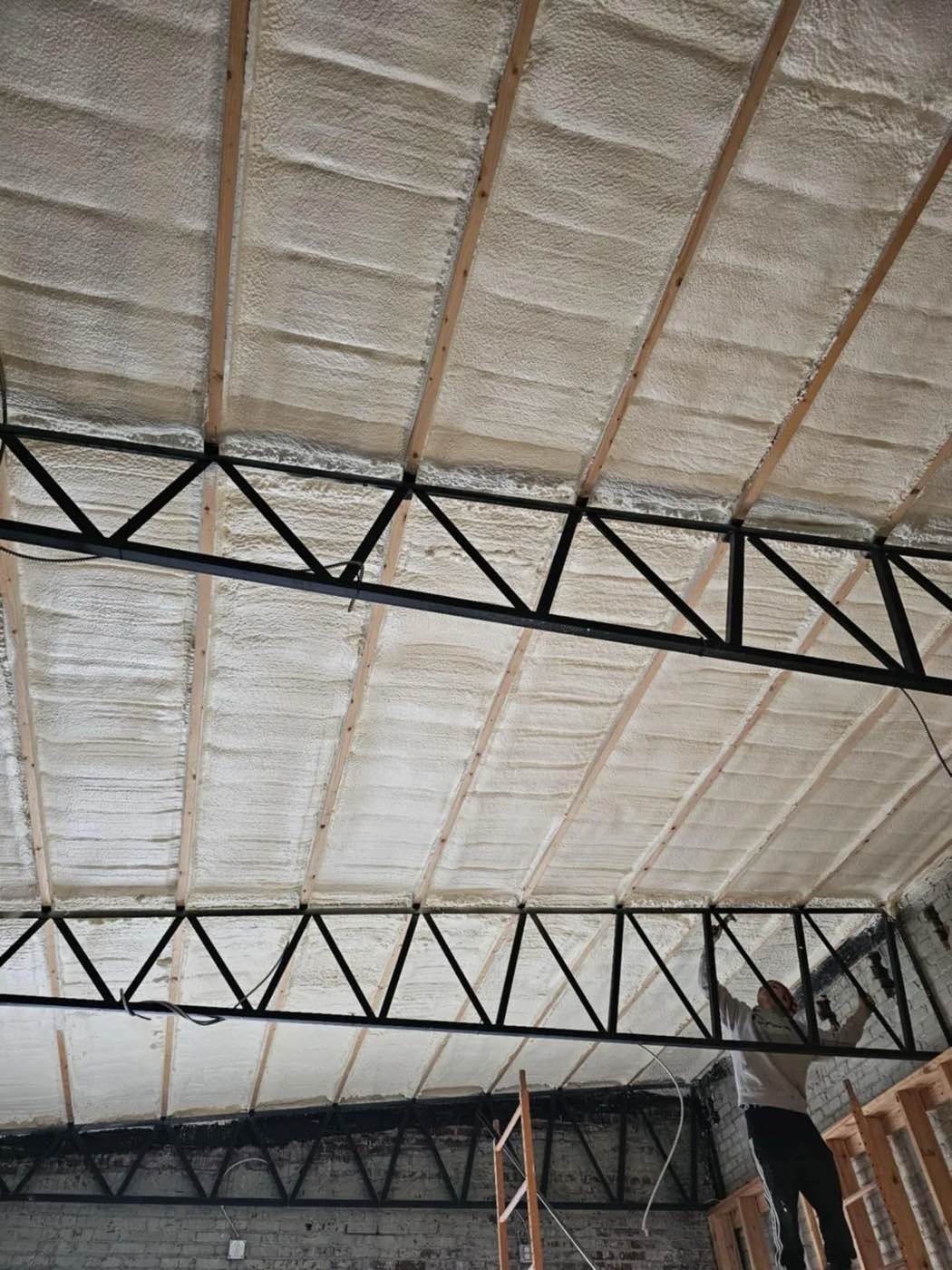
The physics never change: condensation forms when moist air meets a surface below its dew point. Closed-cell spray foam attacks both halves of that equation. Bonded to the roof deck or wall panel, it keeps the interior surface warm enough to stay above the dew point, and because it seals the assembly, humid air cannot migrate to cold surfaces through concealed paths. In spaces where condensation has already degraded older fibreglass, we remove the failed material first and spray a clean, bonded system that breaks the cycle permanently.
Closed-Cell Foam and the Panel Bond That Makes It Work
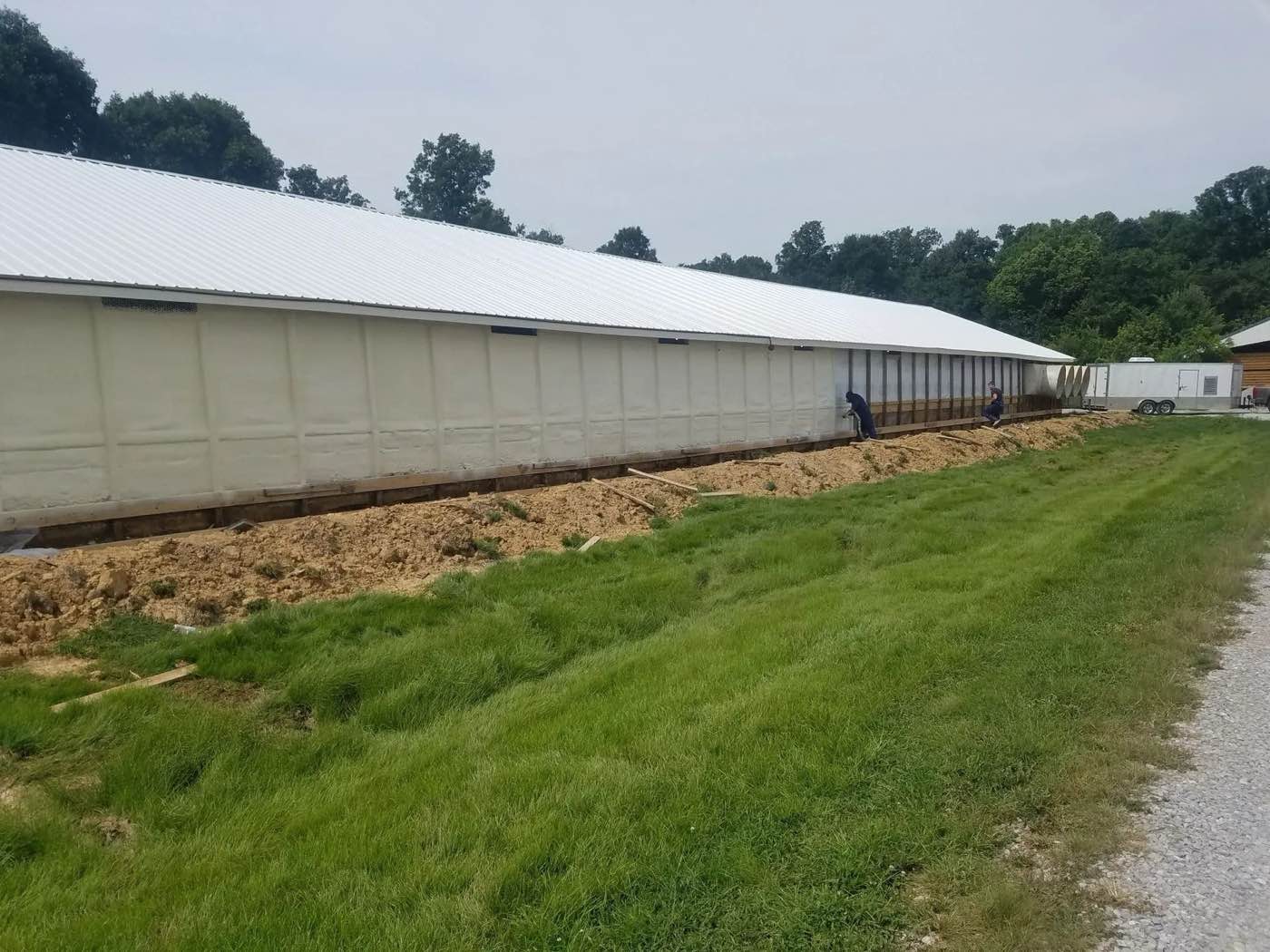
On Franklin's metal buildings, from warehouse space to the service buildings and shops that support the commercial economy, insulation performance comes down to adhesion. Closed-cell foam is sprayed directly onto the steel panel, where it expands and cures into a rigid layer bonded to the surface. That bond eliminates the concealed air gap where condensation otherwise forms invisibly, and it makes the insulation a permanent part of the structure rather than an accessory that can sag, shift, or fall.
The bond brings secondary benefits that owners notice over time. The foam-and-panel composite is stiffer than the bare panel, which matters on older buildings in wind. Closed-cell foam does not absorb water, so a roof leak stays localised instead of saturating a blanket of insulation across the deck. And because there are no seams, fasteners, or joints, there are no weak points for air and moisture to exploit. This is the same direct-to-panel method we use on our pole barn insulation projects in the rural parts of the county.
Insulating Without Disrupting Daily Operations
Franklin businesses run tight schedules, and an insulation project has to fit inside them. We plan occupied-building work in phases: the structure is divided into zones, each zone is masked, sprayed, ventilated, and cleaned before the next begins, and daily operations continue in the rest of the building throughout.
For offices and retail, we frequently work after hours, spraying in the evening and returning the space clean before opening. For warehouses and service buildings, we work bay by bay with containment separating active work from active business. Restaurant work is scheduled around service hours, with coolers and kitchen areas handled in windows that keep food operations compliant and uninterrupted. Every phase is agreed in writing before work starts: which areas are active on which days, what needs covering or moving, and when each space comes back. You can see completed commercial projects on our gallery page.
Budgeting for a Commercial Insulation Project
Franklin owners budget carefully, and commercial insulation pricing should be just as careful. The cost of a project is built from measurable factors, starting with sprayed surface area and the geometry of the building. Open, clear-span space sprays efficiently; buildings with dense racking, mezzanines, or heavy mechanical equipment overhead require more masking, more setup, and slower application.
Material selection and thickness come next. Closed-cell foam carries a higher material cost than open-cell and is the correct choice for metal panels and moisture-critical spaces, while open-cell can serve interior office framing well at lower cost. Access conditions, prep work such as removing failed insulation, and phasing around occupied operations each add time that an honest scope shows plainly. We walk every building before pricing, measure the actual scope, and deliver a written number you can budget against without guesswork.
Serving Williamson County and Nearby Communities
Franklin anchors Williamson County, and we serve commercial properties across the entire county, from downtown professional buildings to the warehouse and service space on the city's edges. Our crews work regularly in Brentwood, Spring Hill, Nolensville, and Thompson's Station, as well as the rural stretches of the county where shops and agricultural-commercial buildings are common.
We serve Franklin and the rest of the metro from our shop in Burns, and our serving area page shows the complete Middle Tennessee footprint. If you are near a county line, call and we will confirm coverage.
Franklin Commercial Insulation FAQs
Get Your Free Estimate
Whether you manage office space, own a restaurant, or run a warehouse in Franklin, the path forward is the same: we walk the building, explain your options in plain language, and hand you a written number tied to a defined scope.
Call (615) 492-9376 or request an estimate. Volunteer FoamPros LLC is veteran-operated, fully licensed and insured, and ready to look at your building.